danza.heroLabel
danza.heroHeading
Macehualiztli
danza.heroText
danza.originsLabel
danza.originsHeading
danza.fireLabel
danza.fireHeading danza.fireHeadingSpan
danza.fireDesc1 — Florentine Codex
danza.fireDesc2
danza.fireQuote
"This Sun, its name Nahui Ollin, this is our Sun, in which we now live."
danza.elementsLabel
danza.elementsHeading
danza.elementsDesc
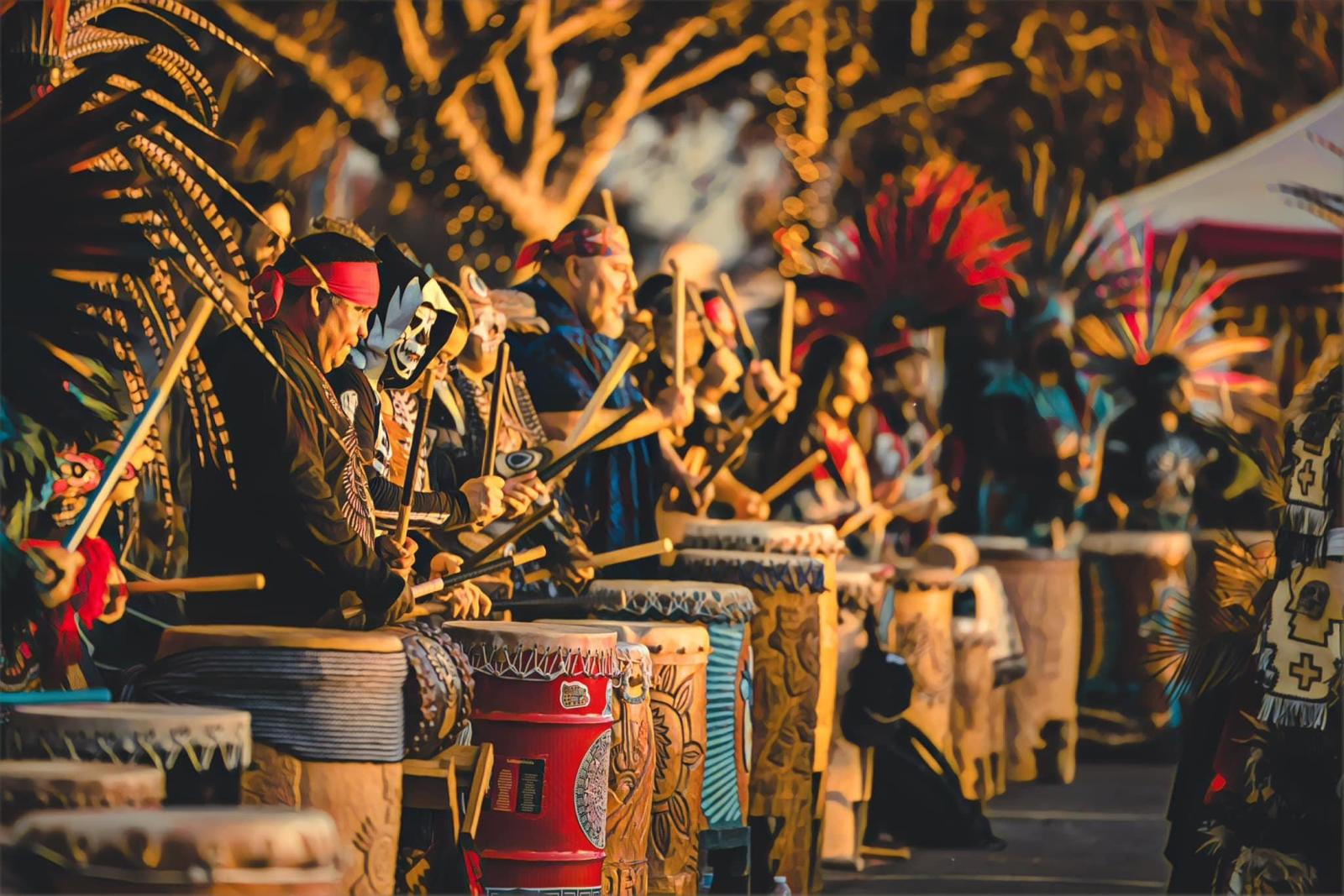
Huēhuētl — "Old Old One"
Huēhuētl
The Sacred Huēhuētl
The huēhuētl was a tall, hand-played drum used in Nahua ceremonies. Its importance is reflected in the Tlalpanhuēhuētl of Malinalco, a large Mexica drum from the Late Postclassic period, AD 1200–1521. The drum's carved surface combines Nahui Ollin (4-Directions), eagle and jaguar warriors, and imagery linked with Xōchipilli-Macuilxōchitl and cuīcatl, or song. The huēhuētl embodied relationships among sacred power, calendrical order, warfare, and ceremonial expression.
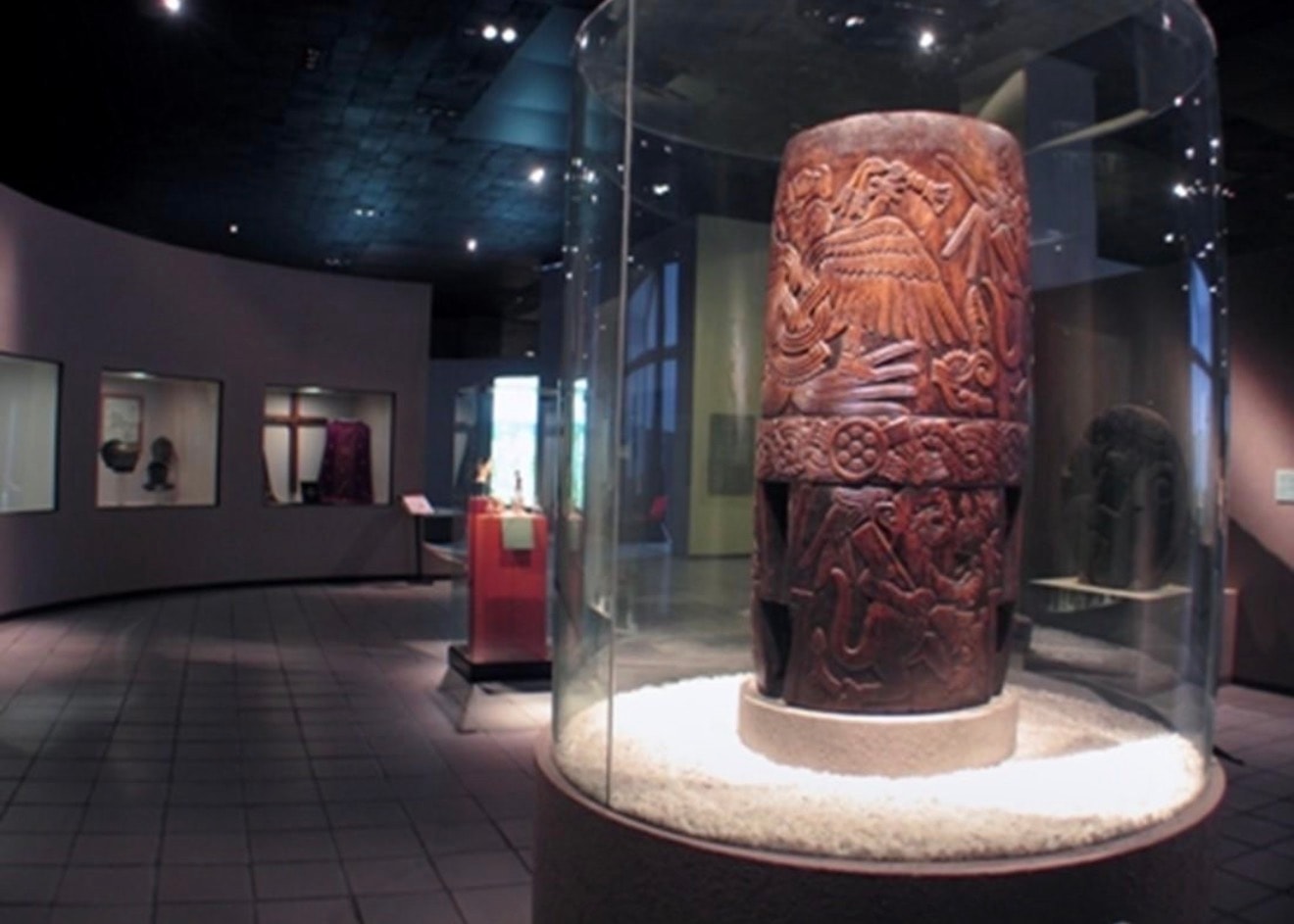
Tlalpanhuēhuētl of Malinalco, museum display. Late Postclassic period, AD 1200–1521.
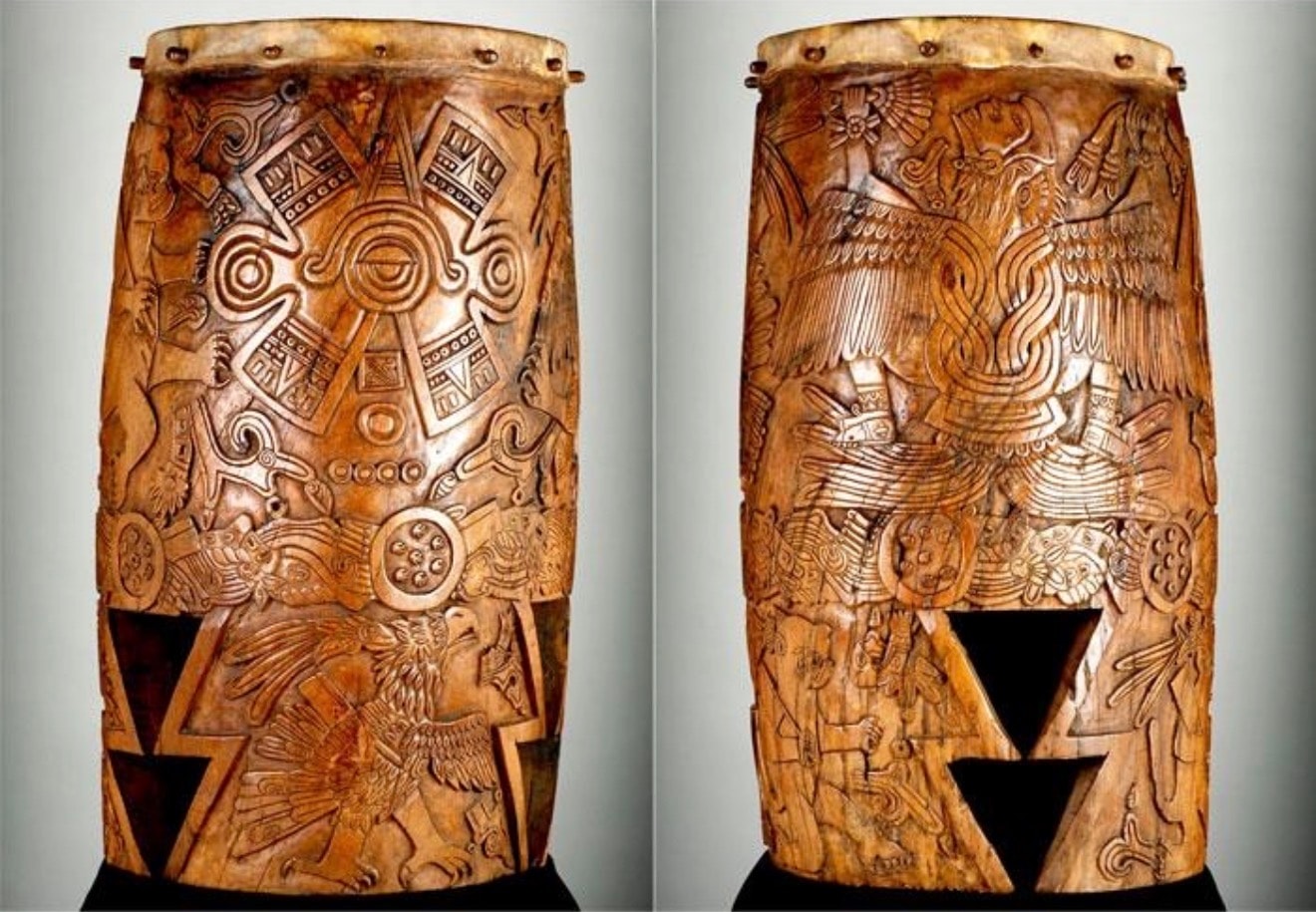
Tlalpanhuēhuētl of Malinalco — both carved faces showing Nahui Ollin, eagle and jaguar warriors.
Tlalpanhuēhuētl of Malinalco — Arqueología Mexicana
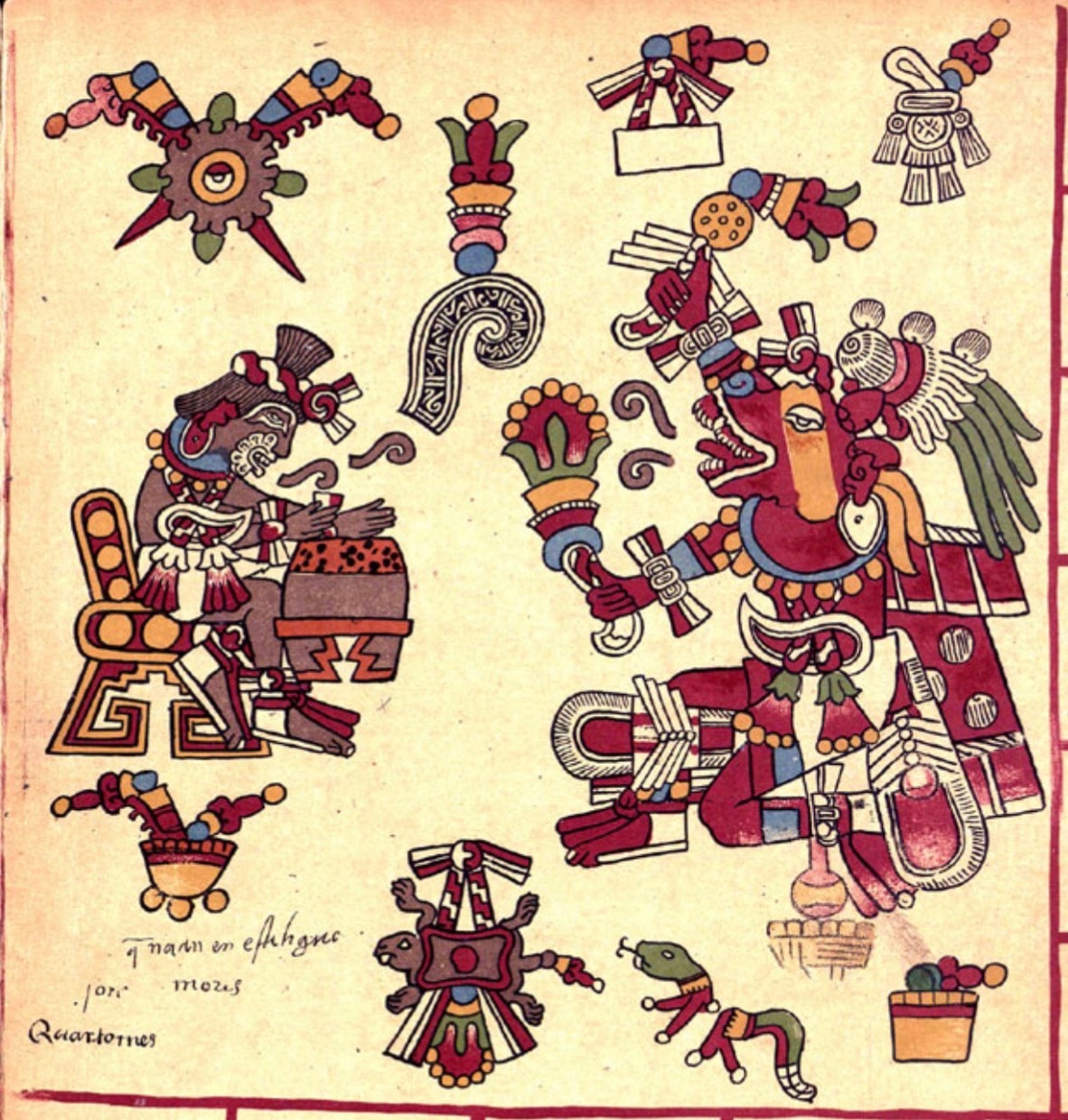
The huēhuētl is also illustrated in Codex Borbonicus, plate 4, where Macuilxōchitl-Xōchipilli sits before a huēhuētl and strikes its membrane with his hands. Because these deities were associated with song, dance, flowers, and ritual performance, the image presents drumming as an integral part of ceremonial practice.
danza.symbolismLabel
- Nahui Ollin (4-Directions) carved on its surface
- Eagle and jaguar warrior imagery
- Associated with Xōchipilli-Macuilxōchitl and cuīcatl (song)
- Embodied sacred power, calendrical order, and ceremony
Tēcciztli/Ātecocolli — "Moon Shell"
Tēcciztli/Ātecocolli
The Sacred Conch
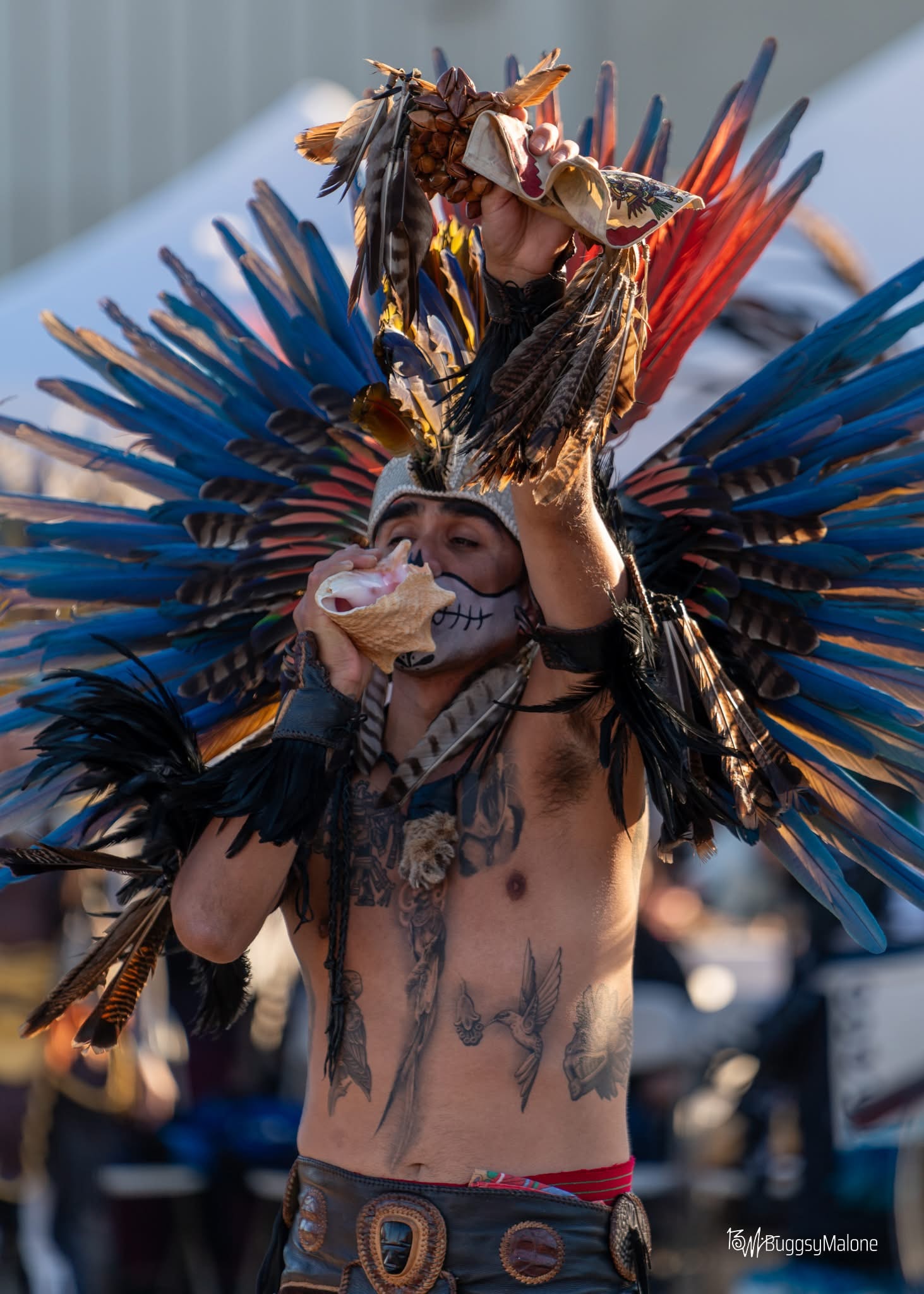
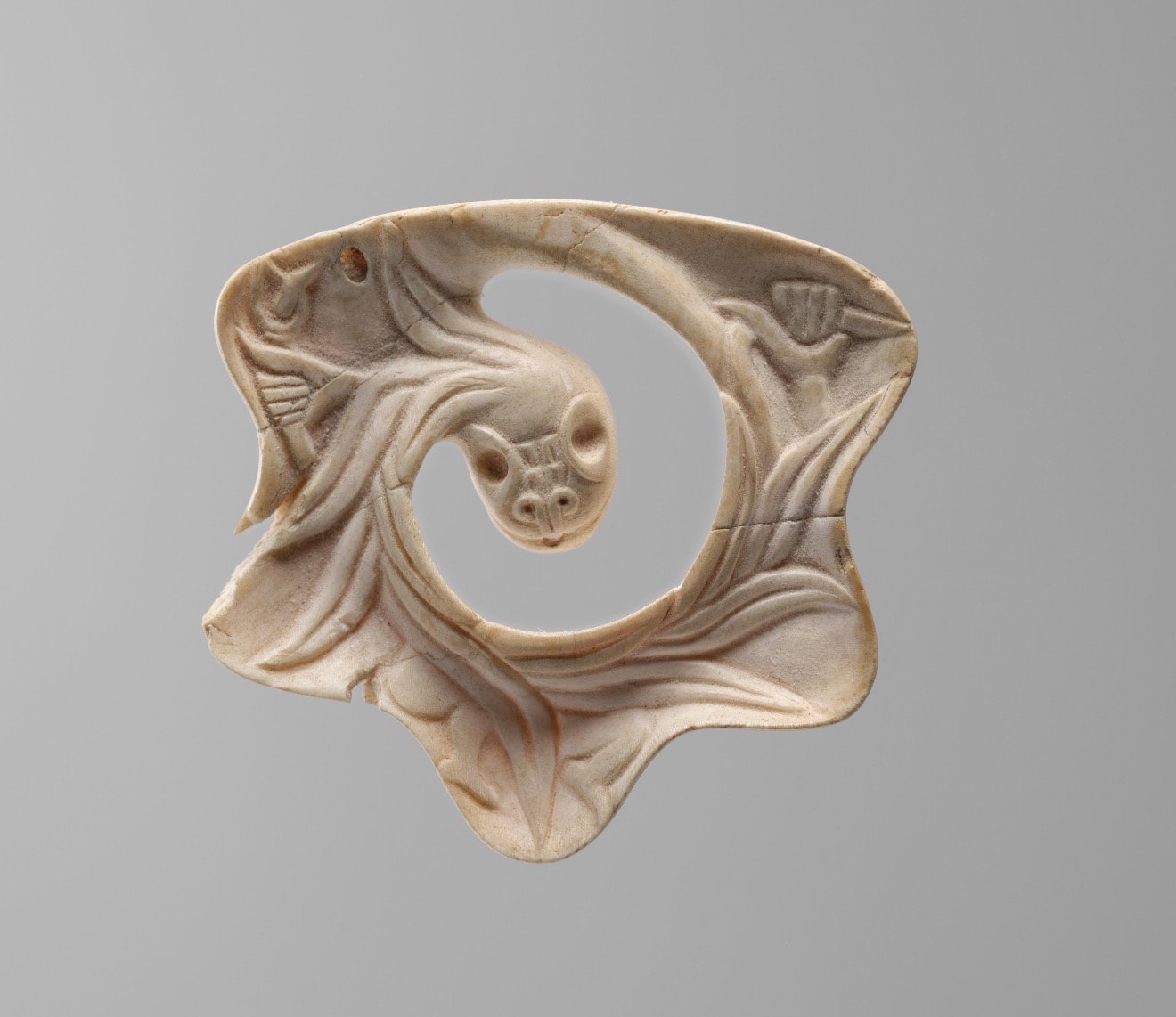
For the Nahua, the conch shell carried sacred meanings connected with water, wind, breath, sound, and life. Marine shells came from the watery realm, while the spiral form of the conch also became closely connected with Ehēcatl-Quetzalcōātl and the movement of wind. Quetzalcōātl's ehēcacōzcatl, or "wind jewel," was fashioned from a cut conch shell.
When prepared as a trumpet, the conch transformed breath into ceremonial sound. Early Nahua accounts document conch trumpets being sounded by priests during ceremonies, offerings, and other sacred rites. The Florentine Codex records shell trumpets sounding at night during priestly bloodletting rites.
Ofrenda 88 — Arqueología Mexicana
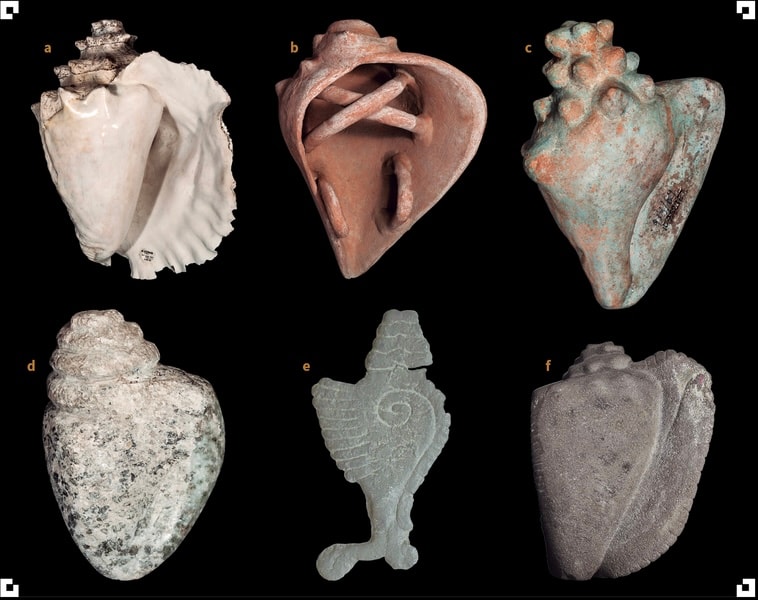
Offering 88 of the Templo Mayor at Mexico-Tenochtitlan contained a large queen conch deposited during construction phase IVb, AD 1469–1481. Significantly, Offering 88 was discovered on the northern, Tláloc side of the Templo Mayor, the half of the great temple dedicated to Tlaloc. Tlaloc is associated with rain, water, mountains, caves, springs, lightning, agricultural fertility, maize, and the life-giving waters within the earth.
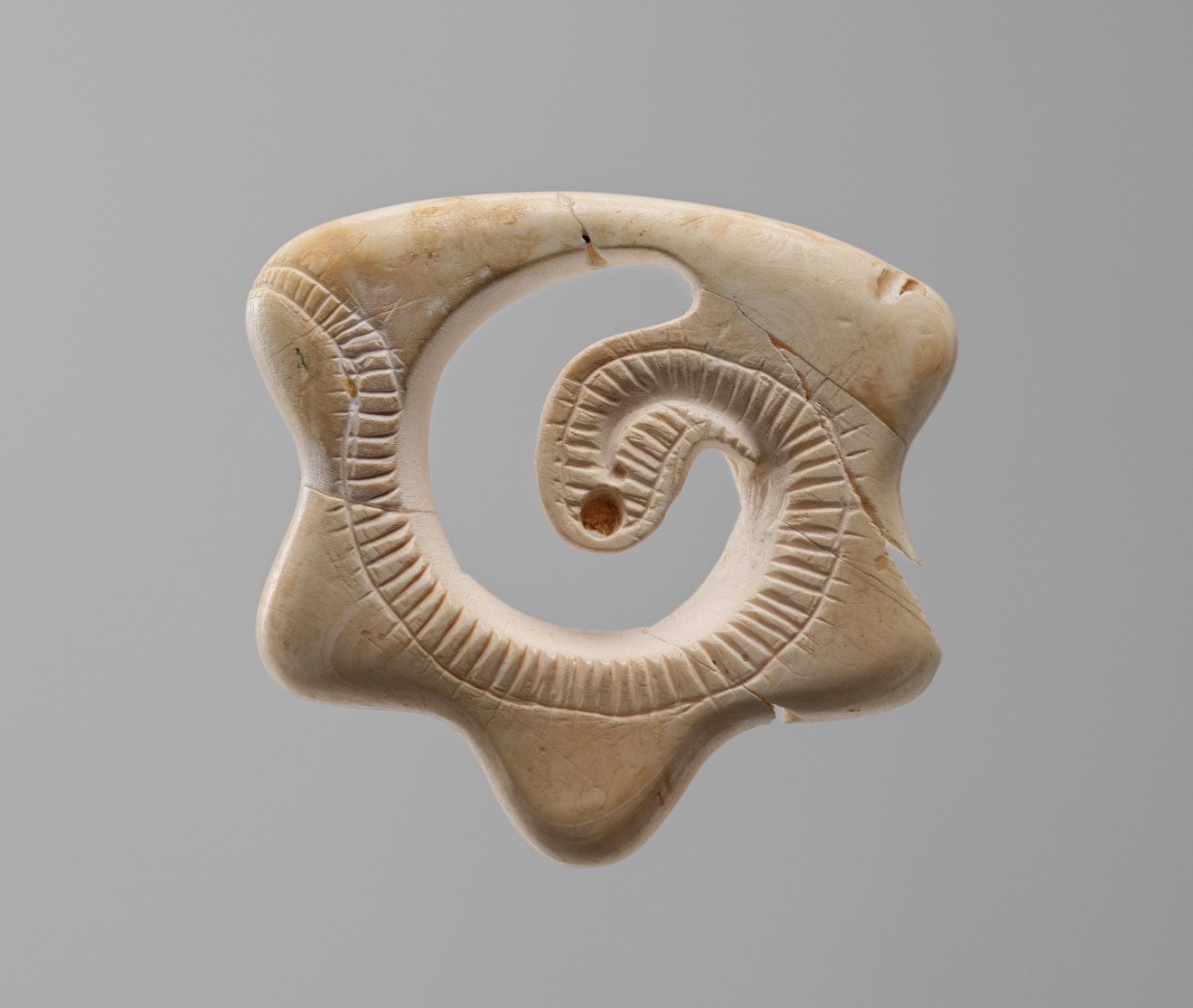
Mexica Feathered Serpent Ehēcacōzcatl, 1325–1521 CE — The Metropolitan Museum of Art
Quetzalcōātl is connected between conch and breath. When Quetzalcōātl descends into Mictlan to recover the bones from which humanity will be created, Mictlantecuhtli commands him to sound a conch. The episode places the breath and sound of the conch within one of the central Nahua narratives concerning death, regeneration, and the creation of human life. UNAM — Instituto de Investigaciones Históricas
danza.symbolismLabel
- Calls the four cardinal directions (winds)
- Announces the opening and closing of ceremony
- The spiral represents cosmic cycles and rebirth
- Associated with Quetzalcoatl and the wind (Ehecatl)
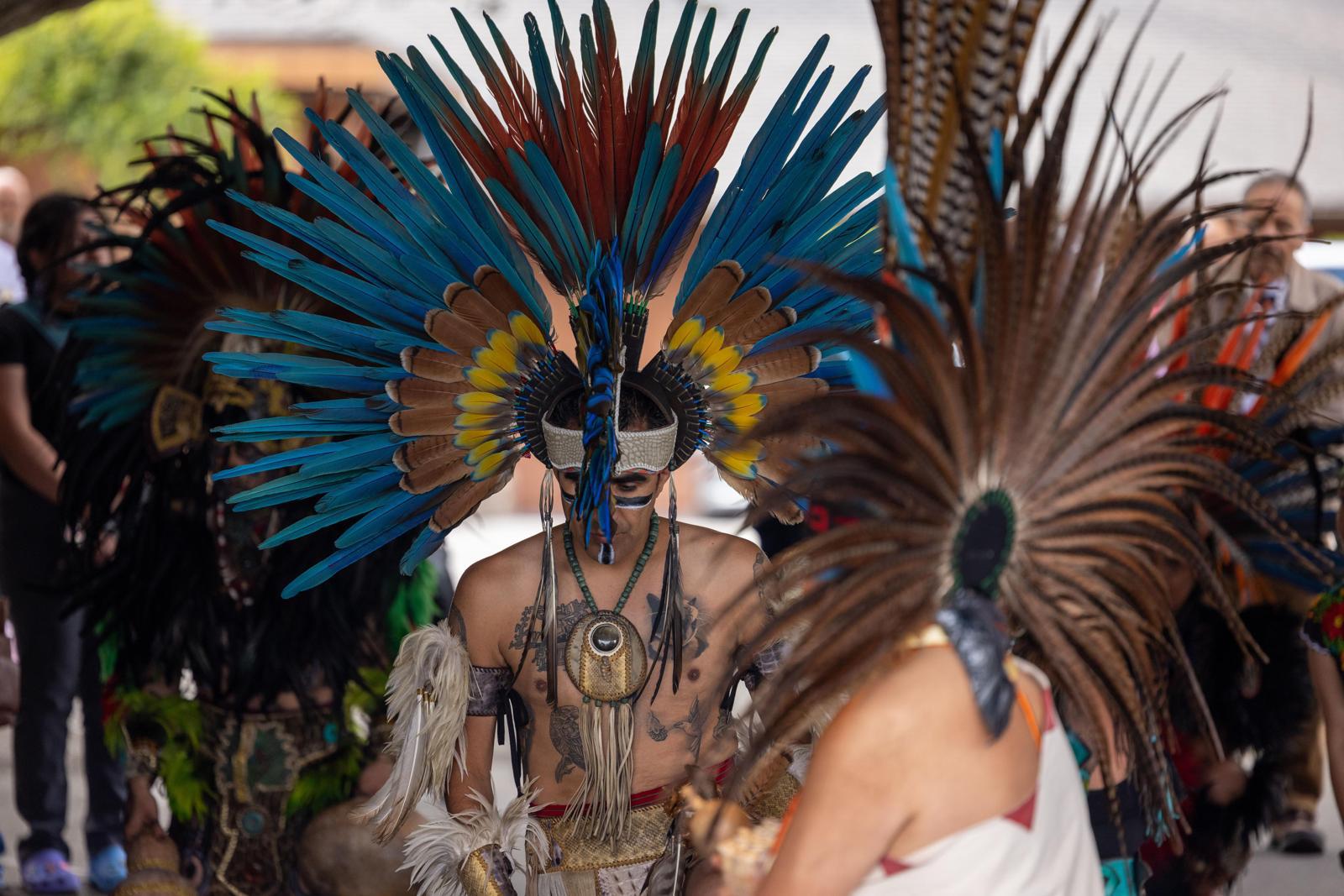
Inhuitl — "Turquoise Crown"
Inhuitl
The Sacred Feathers
Feathers in Mexica tradition are among the most sacred materials — they are the medium between earth and sky, between the human and the divine. The elaborate feathered headdresses (copilli) and regalia worn by dancers are not costumes — they are ceremonial garments that transform the wearer, connecting them to the energy of the bird whose feathers they carry. Each bird species carries specific spiritual meaning.
danza.symbolismLabel
- Quetzal feathers — royalty, divinity, freedom
- Eagle feathers — solar energy, warrior spirit
- Macaw feathers — fire, the sun, transformation
- Feathers bridge earth and sky, human and divine
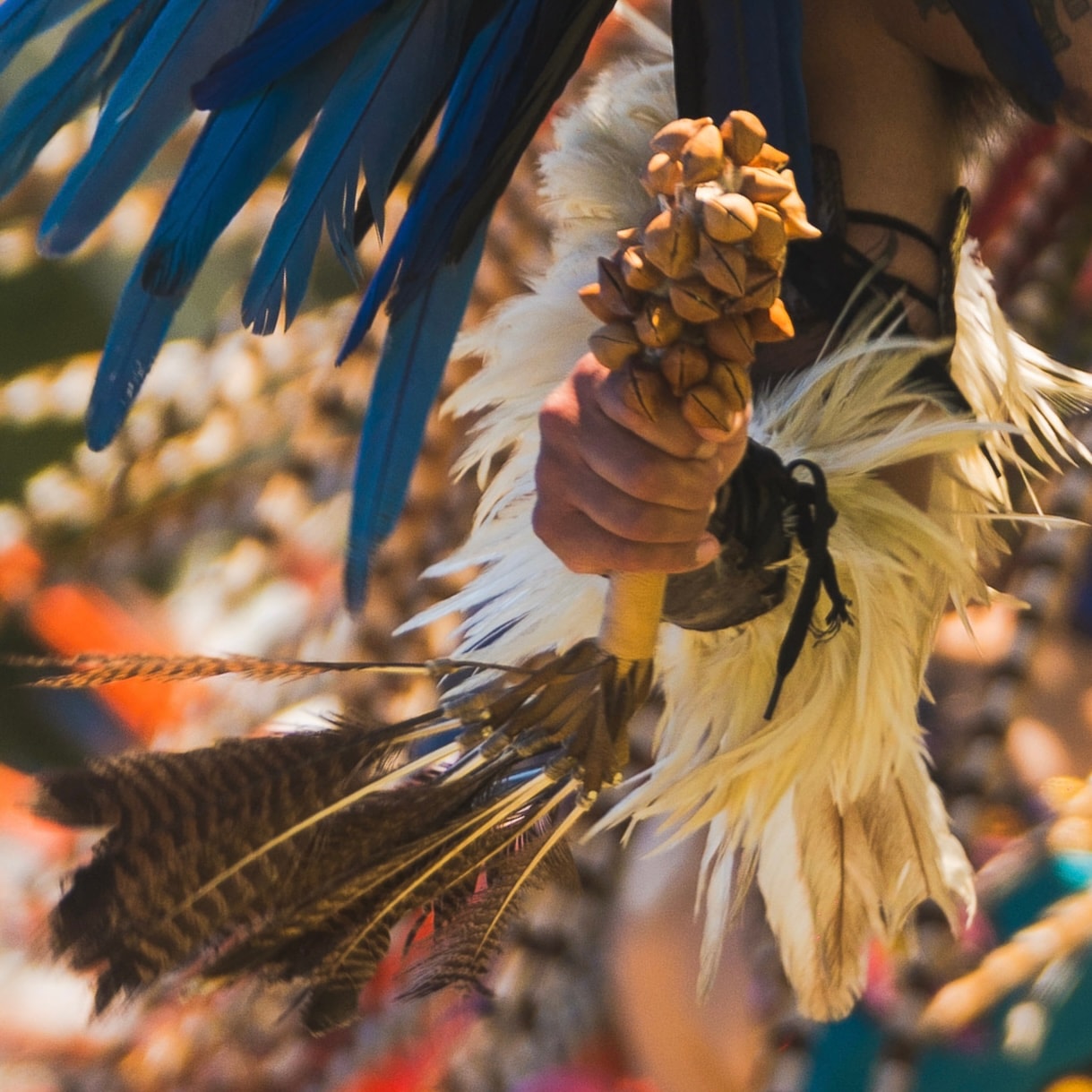
Āyacachtli — "Sonaja"
Āyacachtli
The Sacred Rattle
Codex Borgia, see page 60 — Original manuscript facsimile, Vatican Library
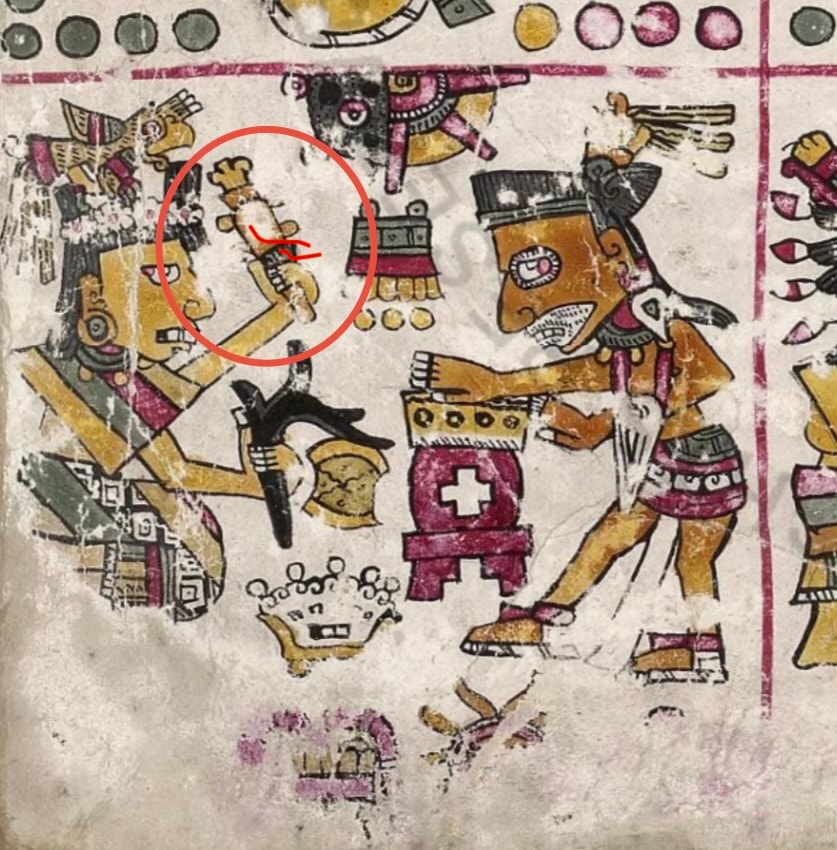
Codex Borgia, p. 60 — āyacachtli depicted in ceremonial context (circled). Vatican Library facsimile.
danza.symbolismLabel
- Rhythm that accompanied the movements of the dancer
- Part of a larger ceremonial soundscape
- Music, song, and dance intertwined with religious life
- Sound and movement as integral elements of ceremony